Baghdad
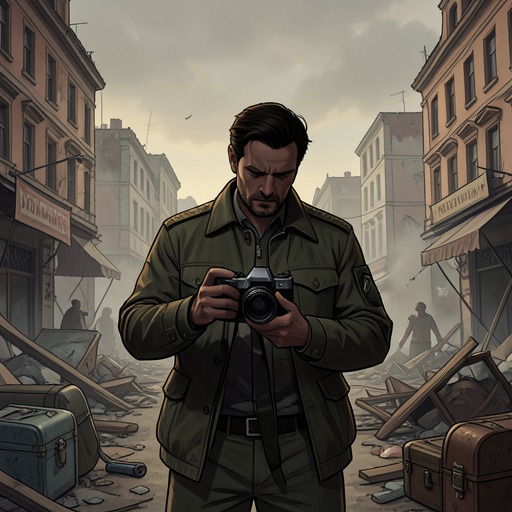
Firefly LaneBaghdad is the wartime setting where Johnny Ryan’s journalism becomes inseparable from danger to his life and family. The city first appears through the access granted to reporters stationed at the Al-Rashid Hotel, then through the violence of the bombing that injures Johnny and the public coverage of his condition. For Tully Hart, Baghdad is also where the risks and intensity of reporting become newly concrete: a place of armed encounters, alarming images, and a story whose consequences reach far beyond the field.
A reporting base under threat
Johnny’s account of Baghdad reaches Kate through a letter written while journalists are gathered at the Al-Rashid Hotel. He describes an unsettled situation, a waiting game, and unprecedented access to both sides of the conflict; the hotel is not merely lodging but the center of an unusually consequential news operation. The letter’s confidence that the coverage will change everything sits beside Johnny’s promise to be careful, foreshadowing the limits of what caution can guarantee.
The city’s danger soon becomes visible from the hotel itself. In a later letter, Johnny describes watching the bombing from above: an office tower explodes close to the hotel, and the blast’s heat reaches them. His account holds together the spectacle of a starry night and the horror of bombs turning the city into a scene of destruction. Baghdad is both a vantage point from which journalists observe war and a place where the violence comes close enough to threaten them directly.
Reporting in the field
The book also connects Baghdad to Tully’s own exposure to war reporting. On a reporting expedition elsewhere, she and Edna Guber travel through guerrilla-infested jungles, and while Edna records an interview with the general in charge, Tully talks with the troops. The experience gives Tully a new understanding of herself: fear, adrenaline, and the story exert an attraction she has not felt before. This episode clarifies why Baghdad’s dangers belong to more than Johnny’s personal history. Reporting places journalists inside volatile situations, where the pursuit of a story is both professional work and a test of what they can endure.
A separate live report makes the immediate physical danger of field journalism unmistakable. Tully is on air when a masked gunman turns toward her and points his weapon at her again. The brief scene offers no safe distance between reporter and event: the live microphone and the gun occupy the same moment. Set beside the accounts of Baghdad, this encounter underscores how a journalist’s access can become exposure, even when the reporting takes place in a different setting.
The bombing and its consequences
The bombing in Baghdad reaches Johnny’s family through a call from his friend Lenny Golliher, who is with him in the city. Lenny tells Kate Ryan that there has been a bombing. The news interrupts the ordinary frame of family life: Kate is holding Marah when she hears it, and her response is to freeze and tighten her hold on her daughter. The city’s war is no longer something conveyed by a journalist’s letter. It has entered the family by way of a telephone connection and the possible loss of a husband and father.
The attack kills reporter Arthur Gulder, who had been with Johnny, and leaves Johnny with serious head trauma. A complicated medical procedure is performed at an army hospital near Baghdad; Tully later reports that specialists said he would not have survived without the lifesaving surgery at the scene. The bombing thus produces two linked outcomes: the death of one journalist and Johnny’s precarious survival. Baghdad’s reporting story becomes a personal tragedy whose consequences persist after the blast itself.
The city in the public story
Tully’s later television report on Johnny’s condition shows how Baghdad’s violence is carried into a wider public narrative. Standing outside a hospital, she explains the bombing near the Al-Rashid Hotel, identifies Johnny as seriously injured, and notes that his family and the German hospital have remained unavailable to journalists. Her report acknowledges their privacy even as it describes the injury and medical intervention. News coverage makes a private crisis visible, but Tully’s framing also recognizes that the Ryan family is experiencing a personal tragedy, not simply supplying material for a story.
The documentary about Tully’s life produces another shift in how the public sees her. Viewers who had known her as a cool, witty professional following stories with journalistic detachment encounter a woman marked by disappointment and abandonment; the phrase most often heard in response is that she is just like them. The documentary’s reception, together with Tully’s prominent role in television and her ownership stake in her show, makes the machinery of public storytelling part of the book’s larger media landscape. In this context, Baghdad stands at the sharpest edge of that machinery: the place where the report concerns a real injury, the person behind the story is someone Tully loves, and professional visibility cannot undo what the bombing has done.